Some characteristics of the reader that are mentioned in the intro are that the readers have short attention spans.
What is the first step to writing an organized story?
The first step to writing an organized story is to organize your interview and research notes so that they make sense to you.
After conducting your interview, what are the steps to getting ready to write the story?
After conducting an interview, the steps to getting ready to write the story are:
- Rewrite your interview and research notes so they make sense to you
- Catorgorize the info in your notes under each of the 5 W's and H or under other topic headings that emerge.
- Prioritize. Which facts are most newsworthy? Which quotes are most interesting? Consider numbering your facts in order of importance and putting stars next to the best quotes.
- Which quotes correspond to which facts? Match them up.
- Write a statement of one or two sentences that explains your story. Imagine you're telling a friend about it. This statement will guide you as you write your lead and the rest of your story. Make sure your statement explains your angle.
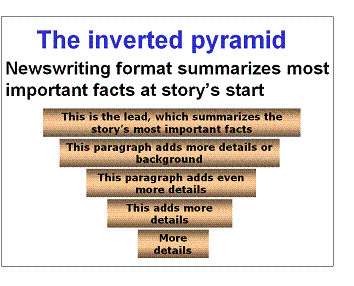
What is the inverted pyramid “in a nutshell”? (3 bullets)
Here's the inverted pyramid format in a nutshell:
- Begin with the lead: a sentence, less than 30 words, that summarizes the most important information of the story. Imagine that you have only 20 seconds to tell someone what happened -- what would you say? That's your lead paragraph.
- Next comes important but no absolutely necessary info.
- Then, keep adding and organizing paragraphs in order of relevance and importance until the least relevant and least interesting info is at the bottom.
 A Martini glass differs from the pyramid You begin with an inverted pyramid summary of the story's most important facts. This is usually just a few short paragraphs. Once that's done, you shift into a chronological order of what happened.
How does the Kabob structure differ from the pyramid?
In the Kabob format, the story begins with an anecdote about a specific person. Immediately after this, be sure to include a nut graph -- a paragraph that summarizes the story idea and the who, what, when, where, why and how. The pyramid gives a way for journalists to be organized.
What is the lesson summary?
A Lesson Summary is the Journalism is not free-writing. Before you start typing up your story, sit down and jot down the highlights. Organize your ideas. Create an outline. If you get stuck, try carving your story up into broad sections, such as:
I. The Problem
II. What it means
III. What happens next


Amber, Good, but next time try to write the info in your own words.
ReplyDelete